
In this post:
Does the Bible teach that people will eternally suffer for their sins or that they will eventually cease to exist?
What did the early church believe?
What does the historical context reveal?
What did they believe during the intertestamental period?
Why eternal life is not immortality.
Series Introduction
Does the Bible teach that people will be tormented forever in some hellish realm, or does it teach that they will eventually cease to exist? In this series, we will attempt to decide which view best fits with scripture. Along the way, we will see that most of the arguments for eternal torment are far weaker than most Christians realize. But first we need to define what Annihilationism and Eternal Conscious Torment are.
Annihilationism (Conditional Immortality)
Annihilationism is the view that God will cease to support the existence of the wicked people that he casts into the Lake of Fire; they will eventually cease to exist. This position is also called Conditional Immortality because in this view immortality is conditioned upon faith and salvation—no one who rejects Jesus will receive the gift of immortality. Some annihilationists do not consider those who sin against God to be worthy of infinite punishment because God does not consider their sins against him as being against his whole infinite glory, and so they understand the suffering in the Lake of Fire to be temporary. Others argue that sin is worthy of an infinite punishment and that this infinite punishment is seen in the sentence to endless non-existence.
Eternal Conscious Torment
The view of Eternal Conscious Torment is that people whom God resurrects and casts into the Lake of Fire will suffer there eternally. Some argue that God made man’s spirit to be immortal, so their existence must continue on regardless of whether they are in Heaven or not. Others argue that although man’s spirit is not naturally immortal, God will cause the damned to be immortal in their suffering. Regardless of which view is adopted, the end result is that the damned are consciously aware of their plight and experience agony for all of eternity. This view holds that people who sin against God are worthy of eternal punishment because their sin has offended God’s infinite glory and earned an infinite punishment by doing so.
Church History
Church leaders who supported Annihilationism
Ignatius of Antioch (107 AD)

“Let us not, therefore, be insensible to His kindness. For were He to reward us according to our works, we should cease to be.” (Epistle to the Magnesians, Chapter 10)
Irenaeus of Lyons (180 AD)

“And again, He thus speaks respecting the salvation of man: He asked life of You, and You gave him length of days for ever and ever; indicating that it is the Father of all who imparts continuance for ever and ever on those who are saved. For life does not arise from us, nor from our own nature; but it is bestowed according to the grace of God. And therefore he who shall preserve the life bestowed upon him, and give thanks to Him who imparted it, shall receive also length of days for ever and ever. But he who shall reject it, and prove himself ungrateful to his Maker, inasmuch as he has been created, and has not recognised Him who bestowed [the gift upon him], deprives himself of [the privilege of] continuance for ever and ever. And, for this reason, the Lord declared to those who showed themselves ungrateful towards Him: If you have not been faithful in that which is little, who will give you that which is great? indicating that those who, in this brief temporal life, have shown themselves ungrateful to Him who bestowed it, shall justly not receive from Him length of days for ever and ever.” (Against Heresies, Book II, 34:3).
Church Fathers Who Supported Eternal Conscious Torment
Clement of Alexandria (200 AD)
“All souls are immortal, even those of the wicked, for whom it were better that they were not deathless.” (Fragment of Clement’s Writings)
Augustine of Hippo (420 AD)

“Our opponents, too, make much of this, that in this world there is no flesh which can suffer pain and cannot die; while they make nothing of the fact that there is something which is greater than the body. For the spirit, whose presence animates and rules the body, can both suffer pain and cannot die. Here then is something which, though it can feel pain, is immortal. And this capacity, which we now see in the spirit of all, shall be hereafter in the bodies of the damned.” (City of God, Book 21, 3:2)
Ancient Near Eastern Context
What did the people around Israel believe? As discussed in the post on the Ancient Near Eastern views on Hell, the only evidence for annihilationism amongst the nations surrounding Israel is found in Egyptian texts. Some Egyptians believed that the damned were thrown into a chaotic realm where they would drift forever, and others believed that the damned were devoured by spirits and ceased to exist. The Greeks clearly believed in the immortality of the spirit and there is no hint in the Canaanite or Mesopotamian texts that annihilationism was a possibility.
So, there is mild support for Annihilationism in Egyptian texts. This means that we cannot claim that no one would have ever imagined annihilationism as a possibility. If it were a completely foreign thought, we would expect to see a robust explanation for it in the Bible—the biblical authors would not be able to assume that their audience knew of the concept.
Between The Old Testament and the New Testament (Intertestamental Period)
Non-biblical texts that were written between the close of the Old Testament and the coming of Jesus support both the view of eternal conscious torment and Annihilationism. Consider these quotes:
Dead Sea Scrolls:
The Community Rule (2nd c. BC)
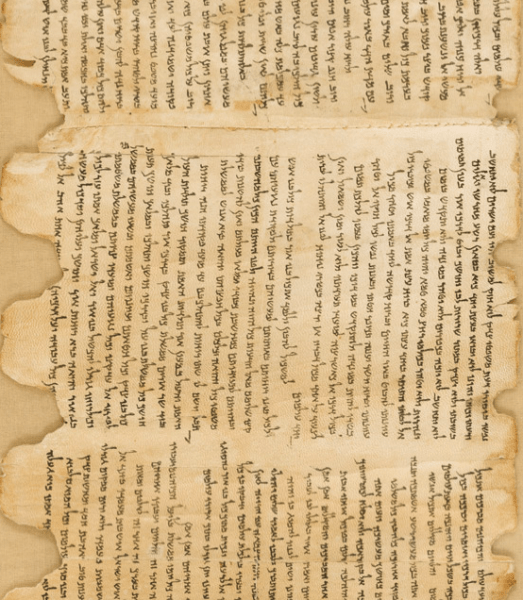
“all who walk in this spirit shall be a multitude of plagues by the hand of all the destroying angels, everlasting damnation by the avenging wrath of the fury of God, eternal torment and endless disgrace together with shameful extinction in the fire of the dark regions. The times of all their generations shall be spent in sorrowful mourning and in bitter misery and in calamities of darkness until they are destroyed without remnant or survivor.“(Community Rule: 4:12-14)
Judith (2nd c. BC)
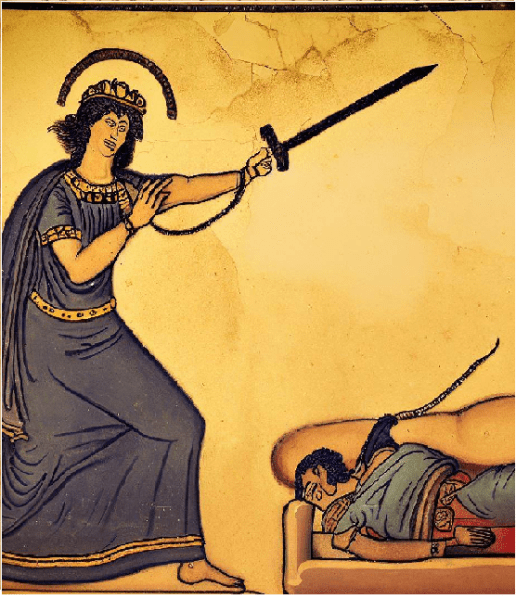
“Woe to the nations who rise against my race! The Lord Almighty will punish them on judgement day. He will send fire and worms in their flesh and they will weep with pain for evermore.” (Judith 16:17)
The language of the Community Rule of Qumran is jarring. We see both eternal torment and extinction mentioned in the same sentence! This combination could reflect a common understanding that ‘eternal torment’ is not truly eternal, which would then imply that even the Judith text does not really talk about weeping and pain for evermore. However, if we claim that ‘forever’ never means ‘forever’ unless the text is talking about eternal life, then we’re setting up a scenario where no one could ever even talk about the wicked suffering forever because ‘forever’ always means something other than ‘forever’ when the wicked are talked about. It would not even be possible to say “The wicked don’t suffer forever” because “forever” would not mean “forever” in the context of the wicked. That would be a very silly thing for us to claim, so we are better off understanding ‘forever’ and ‘eternal’ to really mean ‘forever’ and ‘eternal’ unless the author makes it clear that he has some other definition in mind.
The Qumran community is also known for combining texts that appear to speak on the same subject, regardless of whether they contradict or are truly on the same subject. It could very well be that this Community Rule is combining two traditions on the fate of the wicked without trying to reconcile them. Having spent much time reading Qumran texts, I think this option is the better one. So, I think that the Community Rule reflects both an Annihilationist view and an eternal conscious torment view, and that Judith reflects only the eternal conscious torment view.
Immortality is not Eternal Life

The way that one defines eternal life has a huge impact on this discussion. Annihilationists define eternal life as endless existence without regard to the condition of that existence (whether happy or in agony). So, all the passages about eternal life that clearly show that only believers get eternal life are evidence that unbelievers should not be immortal (existing forever).
By this understanding, Jesus’s offer of eternal life is meaningless if everyone is immortal by default:
Matt. 7:13-14 Enter through the narrow gate; for the gate is wide and the way is broad that leads to destruction, and there are many who enter through it. 14 For the gate is narrow and the way is constricted that leads to life, and there are few who find it.
John 3:16 For God so loved the world, that He gave His only begotten Son, that whoever believes in Him shall not perish, but have eternal life.
John 4:14 but whoever drinks of the water that I will give him will never thirst—ever; but the water that I will give him will become in him a well of water springing up to eternal life.
John 10:28-30 and I give eternal life to them, and they will never perish—ever; and no one will snatch them out of My hand. My Father, who has given them to Me, is greater than all; and no one is able to snatch them out of the Father’s hand. I and the Father are one.
If Jesus was talking about merely endless existence, and everyone will exist forever regardless of whether or not they will follow Jesus, then his offer of eternal life is worthless. Since we don’t want to say that his offer is worthless, then those who reject Jesus must not exist forever! But is that what Jesus was talking about?
The more popular view is that eternal life is not merely endless existence, but endless existence in harmony with God. Even today we say things like, “A man who works 90 hours a week isn’t really living.” We don’t mean that he is a zombie; we mean that the life he experiences isn’t worthy of being called ‘life’ because it doesn’t meet the standards that we consider to be a life worth living. We see the same type of expression in 1 Timothy:
1Tim. 5:6 But she who lives in self-indulgence is dead even while she lives.
Consider these verses and ask yourself if the ‘eternal life’ that they speak of is just immortality or immortality plus harmony with God:
Psa. 16:11 You will make known to me the path of life; In Your presence is fullness of joy; In Your right hand there are pleasures forever.
Psa. 49:15 God will redeem my soul from the power of Sheol, for He will receive me. Selah.
Dan. 12:2 And many of those who sleep in the dust of the ground will awake, these to everlasting life, but the others to reproach and everlasting contempt.
John 17:3 And this is eternal life, that they may know You, the only true God, and Jesus Christ whom You have sent.
1Thess. 4:15, 17 For this we say to you by the word of the Lord, that we who are alive and remain until the coming of the Lord, will not precede those who have fallen asleep… Then we who are alive and remain will be caught up together with them in the clouds to meet the Lord in the air, and so we shall always be with the Lord.
Jesus defines eternal life as knowing God the Father and himself. David looked forward to being redeemed from the grave so that he could be with God. Another Psalmist rejoiced to know the path to eternal life because that path leads to eternal pleasure. Daniel contrasts eternal life with eternal contempt.
By contrast, having an endless existence while in a state of disharmony with God and being punished forever would not be eternal life as the Old and New Testament authors thought of eternal life. That is simply not the eternal life that the biblical authors had in mind. So, the case of Annihilationism must stand or fall on the basis of other texts that clarify what the end result of the unbelievers will be.
Summary So Far
Support for both eternal conscious torment and Annihilationism is found in the writings of prominent figures in the early church, proving that neither position has always been the view of the church.
The Ancient Near Eastern context mostly supports the view of eternal conscious torment, but there is some support for Annihilationism amongst the Egyptians, so it cannot be claimed that nobody could have imagined Annihilationism was possible. If only one was supported, then the Old Testament would have to unambiguously refute it in order to make room for the other.
The intertestamental texts appear to support both Annihilationism and eternal conscious torment.
The Annihilationists who try to prove their case by arguing for eternal life merely being eternal existence are making a very weak case that doesn’t fit with what eternal life is within the Bible. Eternal life is eternal existence in harmony with God, not merely existing forever. If this were the main argument for Annihilationism, we could end the debate here. But this is their weakest evidence; the strongest proofs are coming up.
Up Next
In our next post, we will look at the specific texts that are most commonly used to support eternal conscious torment. I think we will find that they are not as obviously one-sided in their interpretation as is often assumed by both sides of this debate.
 VersesVersusVanity
Leave a comment